


What executive candidates will expect from employers in 2026
The executive talent market has fundamentally shifted, and by 2026, senior leaders will be evaluating employers through a far more demanding lens. They no longer weigh opportunities primarily on compensation or title; they assess the total leadership experience: governance, culture, organisational stability, purpose, autonomy, flexibility and long-term growth. To attract and retain high-caliber executives in this environment, employers must demonstrate substance, not slogans, across all these dimensions.

In 2026, executive candidates evaluate employers based on governance quality, organisational stability, purpose, flexibility and long-term leadership growth rather than compensation or title alone.

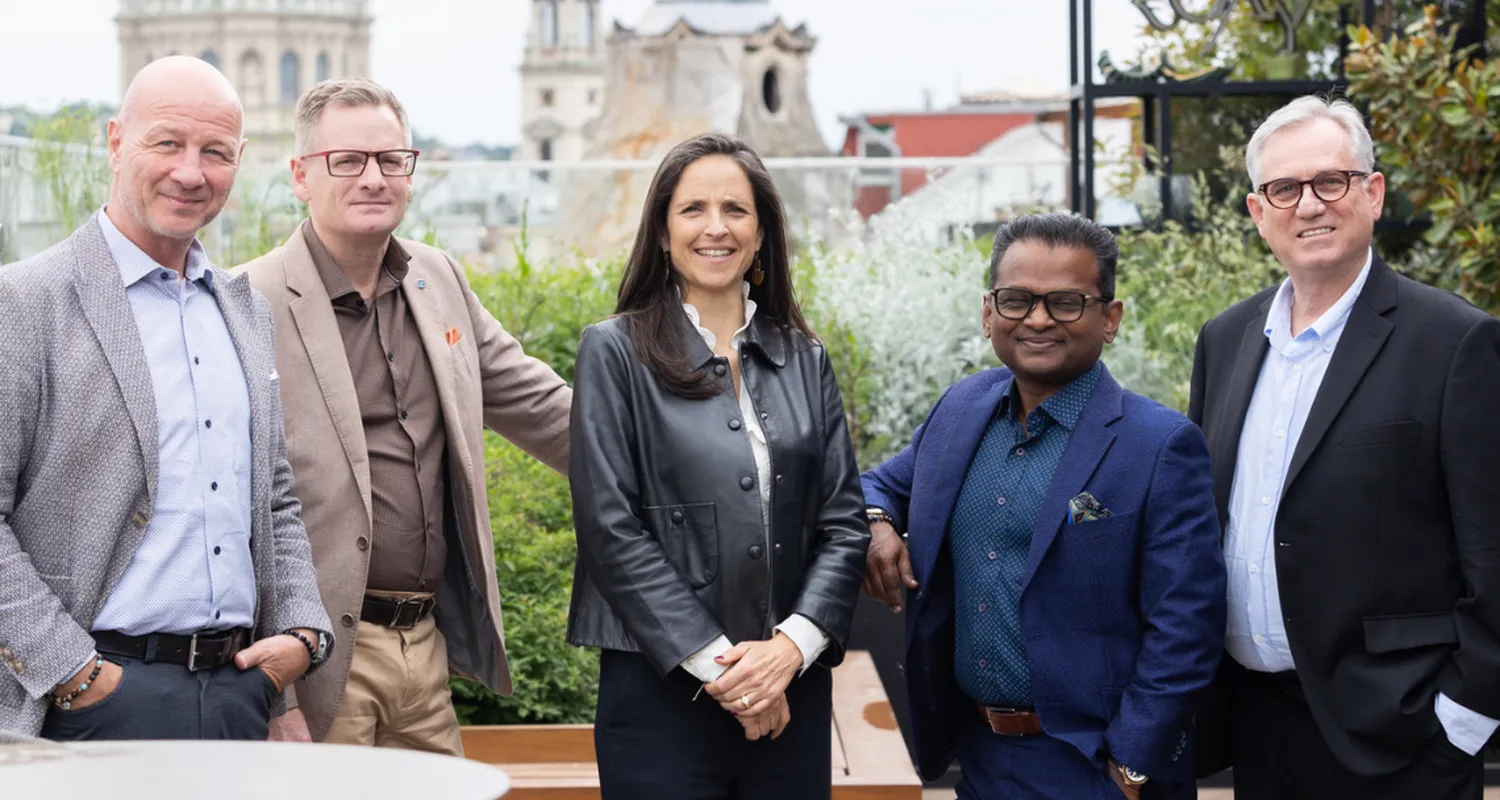
Kestria Institute Council members, drawing on decades of experience advising boards, CEOs and senior executives across global markets, have identified five expectations that now shape how senior candidates assess potential employers in 2026: credible governance and culture, demonstrable stability, purpose that truly guides decisions, flexibility as a performance system and clear pathways for long-term leadership growth.

Executives expect proof, not promises

For top executive talent, culture has become something to be tested, not marketed. Senior leaders now interrogate how an organisation behaves under pressure, especially in the Board–CEO–leadership dynamic, rather than taking values statements or employer branding at face value. They know from experience that dysfunctional boards, insecure CEOs or fragmented leadership teams can quickly undermine even the most attractive role.​

In 2026, candidates run their own form of governance and cultural due diligence during the interview process. They look for evidence in three areas:

  • Trust and challenge over micromanagement: Is the board a true strategic sparring partner that empowers leadership or does it drift into operational control?
  • Decision maturity under pressure: How are difficult decisions made, who truly owns the outcomes and how does the organisation respond when things go wrong?
  • Alignment rather than factions: Is there a shared strategic direction or competing camps with hidden agendas?

Typical proof‑seeking questions include:

  • When has the board visibly supported the CEO under pressure?
  • How were unpopular decisions handled and communicated?
  • Where does governance end and management begin in practice?

Equally, candidates are quick to spot red flags: boards that drift into operations and call it governance, defensive or overly controlling CEOs who substitute politics for execution, or incoherent boards whose shifting priorities create instability for the executive team. Executives do not join culture claims; they join real power dynamics, decision logic and organisational backbone. Employers that cannot show this in concrete terms will struggle to make any serious shortlist in 2026.​

Why stability and governance matter to executive candidates in 2026

While culture and governance determine whether executives trust an organisation, their confidence is ultimately anchored in perceived stability. Today’s senior candidates are increasingly assessing stability through a risk lens, shaped by macro volatility, faster leadership turnover and frequent strategic resets. The core question has shifted from ‘Is this role attractive?’ to ‘Are the conditions in place to lead effectively and sustainably?”’

A recent survey of senior professionals and executives highlighted the single most important factor in their confidence in an organisation:

  • 43% cited board–management alignment
  • 32% pointed to strategy transparency
  • 18% selected financial resilience
  • 7% chose leadership continuity

Two insights stand out. First, alignment and clarity dominate: board–management alignment and strategy transparency together account for nearly three quarters of responses, underscoring that predictable decision‑making, reduced political friction and coherent execution are now the primary proxies for organisational stability. Second, financial resilience and leadership continuity have become baseline expectations rather than differentiators; organisations that cannot demonstrate financial discipline are screened out early, while leadership continuity is increasingly seen as an outcome of strong governance and strategic coherence, not a confidence driver in its own right.​

For boards and executive teams, the implication is clear: confidence in the executive talent market is no longer built through narrative, reputation or legacy alone. It is earned through visible alignment, disciplined governance, and consistent communication of strategic intent.

How purpose influences executive candidates’ employer choices

Once executives are confident that an organisation is stable, aligned and governable, their attention shifts to whether the leadership challenge itself is worth committing to. In a world where risk is unavoidable, purpose has become the lens through which senior leaders judge whether that risk is meaningful and aligned with their own values and ambitions.​

Purpose has shifted from a cultural aspiration to a strategic filter. In 2026, senior executives are not asking whether an organisation has a purpose statement; they are probing whether the work ahead justifies the personal, reputational and cognitive investment it will require. This is especially evident in complex, highly scrutinised sectors such as Life Sciences and Healthcare, where capital is more selective, timelines are longer and pressure to demonstrate long-term value creation has intensified. In such environments, purpose provides coherence and resilience when difficult trade-offs cannot be avoided.

Executives are drawn to organisations where purpose clearly informs strategy rather than marketing. They test how purpose shapes capital allocation, product and customer priorities and risk tolerance, and whether it endures when decisions become politically or financially difficult. Roles that offer genuine influence over strategic direction are perceived as more credible and sustainable than narrow execution mandates.

Authenticity is non-negotiable. Senior leaders are acutely attuned to gaps between stated and lived purpose; performative purpose is increasingly viewed as a risk factor, signaling organisational immaturity and raising the likelihood of disengagement. In 2026, purpose functions as shorthand for organisational seriousness. Employers that can articulate and consistently demonstrate a credible purpose will stand out not by promising inspiration, but by offering meaning, coherence and the opportunity to shape outcomes that matter.

What executive candidates expect from flexibility and ways of working

For many senior leaders, purpose becomes credible only when the organisation also creates the conditions that allow them to do their best work. Flexibility is central to this equation, but its meaning at the executive level has changed fundamentally.​

In 2026, flexibility is no longer about where leaders work; it is about how effectively they work. Senior executives increasingly see autonomy and outcomes, rather than presenteeism, as the true test of organisational maturity. Flexibility has evolved from a location benefit into a leadership system that shapes how work is structured, how decisions are made and how performance is measured. As a result, candidates closely examine how hybrid models operate in practice: the clarity of decision rights, the rhythm and intentionality of in-person collaboration and whether outcomes, not hours, truly drive expectations.

Respect for bandwidth and cognitive load has become critical. Executive roles are cognitively demanding and modern ways of working can add new layers of complexity. Senior leaders, therefore, assess meeting discipline, the effectiveness of decision forums and whether deep work is structurally protected rather than pushed into evenings and weekends.​

When designed deliberately, flexibility becomes a performance enabler rather than a perk. Executives gravitate toward organisations that use flexibility to improve judgment, accelerate learning and sustain energy over long transformation cycles, rather than to tick an EVP box. By 2026, an employer’s approach to flexibility functions as a clear signal of organisational maturity, revealing whether it is built around control and uniformity or around trust, differentiated contribution and sustained, high-quality decision making.​

Leadership growth and long-term career pathways for senior executives

Once executives are confident they can perform at their best, their focus shifts to a longer-term question: Will this role continue to stretch, grow and matter over time? Increasingly, senior leaders evaluate opportunities not as discrete positions, but as platforms for sustained challenge, development and influence.​

Research into executive retention consistently shows that the strongest predictor of long‑term commitment is the perceived opportunity and challenge embedded in the role itself. Culture, remuneration and lifestyle remain important, but they are secondary to whether a role continues to evolve and allow meaningful contribution. In 2026, experienced leaders prioritise purposeful progression over simple advancement. Opportunity and challenge are closely linked to visibility and influence, so candidates look for clarity on how a role may expand strategically, how it connects to the organisation’s future direction and the degree of exposure it offers to the board and key stakeholders. Commitment increases when organisations provide credible, transparent conversations about future scope and succession—not guarantees, but thoughtful perspective.​

Leadership development reinforces this dynamic only when it is personal and embedded in the work. Senior executives consistently reject generic programmes in favour of tailored opportunities that involve real stretch, increased complexity, strategic exposure and trusted senior relationships. Employers of choice in 2026 will be those that can articulate a clear, compelling future state for the role and demonstrate a willingness to shape opportunity around what truly motivates individual leaders. Executives join, and stay, when they believe the organisation understands their drivers and is prepared to invest in their long-term growth.

Employers of choice will be built, not claimed

Executive candidates in 2026 will choose employers that demonstrate credibility, consistency and clarity across governance, stability, purpose, flexibility and growth. Organisations that live their culture through robust governance, show strategic stability, anchor decisions in meaningful purpose, enable high performance through mature flexibility and commit to long-term leadership pathways will stand apart in an increasingly competitive market.​

Such employers will not rely solely on employer branding. They will internalise these expectations, redesign their executive value proposition accordingly and treat every senior appointment as a mutual investment. Those that do will secure, retain and empower the next generation of exceptional executive leaders.


Contributors

Elevate leadership: Kestria Institute unveils executive excellence and insights.