
As the world's leading executive search alliance, Kestria developed the Global Leadership Barometer to contribute to the global leadership conversation through evidence-based insight. This year's survey explored leadership challenges and organisational preparedness, leadership talent, digital capability and AI, diversity, equity and inclusion (DEI) and the leadership capabilities organisations will need to succeed in the future.
Leadership in a changing world
„Each edition of the Global Leadership Barometer allows us to look beyond immediate pressures and understand how leadership is evolving across industries and markets. Although the challenges facing organisations continue to shift, one truth remains constant: leadership is the decisive force that turns uncertainty into opportunity, ambition into action and change into sustainable growth.“

Katerina Meimaroglou
Leadership at a glance
This year's Global Leadership Barometer explores how organisations are:
- navigating an increasingly volatile external environment;
- advancing AI adoption while building internal capability;
- competing for leadership talent while continuing to prioritise local recruitment;
- embedding diversity, equity and inclusion into leadership practice; and
- strengthening the human capabilities needed to lead through change.
Key Leadership Challenges
Leadership challenges are evolving in a disrupted market
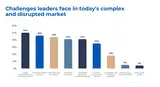
Organisations face a broad range of interconnected leadership challenges, reflecting the increasingly complex environment in which leaders operate. Digital transformation and technology adoption emerged as the most significant challenge, cited by nearly half of respondents (49.5%), followed by competitive market pressures (45.7%) and talent acquisition and retention (44.1%). Geopolitical instability, operational resilience and economic uncertainty also ranked highly, highlighting the wide range of internal and external pressures shaping leadership priorities. By contrast, sustainability and regulatory compliance, and particularly DEI, were less frequently identified as immediate challenges. Taken together, organisations appear to be balancing multiple strategic priorities rather than responding to a single dominant issue.
While digital transformation remains the most significant leadership challenge, geopolitical instability has become the challenge that has intensified most over the past year. More than half of respondents (52.9%) reported that geopolitical instability has become more problematic, ahead of economic uncertainty (38.9%) and competitive market pressures (36.8%), reflecting the growing influence of external forces on organisational leadership. Despite these increasing pressures, organisations remain broadly confident in their ability to respond. Almost nine in ten respondents believe their organisation is either similarly well placed (46.6%) or better placed (41.3%) to meet these challenges than a year ago, while only 12.2% feel less prepared. Despite the more volatile operating environment, most organisations believe they have maintained or strengthened their readiness to navigate ongoing disruption.
Leadership Talent
Leadership talent demand remains strong despite a preference for local hiring
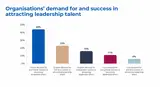
Despite continued demand for leadership talent, most organisations continue to prioritise local recruitment. More than half of respondents (52.5%) reported a preference for local leadership talent, while only 10.1% actively seek leadership talent from outside their country. A further 12.0% expressed interest in offshore talent but do not proactively recruit internationally, and one-quarter (25.4%) indicated no preference between local and offshore candidates. Leadership hiring remains predominantly focused on domestic markets, despite growing recognition of the value of international talent.
The findings suggest that organisations continue to view local market knowledge as a strategic advantage in leadership appointments. Despite increasing global connectivity and competition for talent, recruitment strategies remain firmly focused on leaders who understand the commercial, regulatory and cultural context in which they operate.
Digital Capability and AI
Building AI capability remains a leadership priority
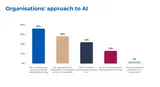
AI is firmly on organisations' strategic agenda, although relatively few have reached a mature stage of implementation. More than one-third of respondents (35.9%) reported that their organisation is developing a comprehensive and integrated AI strategy, while only 12.6% have already established one. At the same time, almost half of organisations continue to adopt a reactive or limited approach to AI. These results indicate that AI has become a strategic leadership priority, although many organisations are still translating ambition into organisation-wide capability.
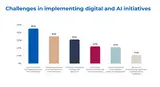
Implementing AI remains as much a leadership challenge as a technological one. Insufficient skills and capability within the organisation emerged as the most significant barrier, cited by 44.8% of respondents. Competing business priorities (34.9%) also constrain organisations' ability to maintain focus and investment, while only 11.2% reported that they are not encountering significant implementation challenges. The principal barriers to AI implementation therefore lie in building organisational capability and sustaining strategic focus, rather than in the technology itself.
This is also reflected in how organisations are building AI capability. Nearly half of respondents (49.7%) prioritise upskilling existing employees, while only 11.0% have a clear strategy for attracting external AI talent. This suggests that organisations are focusing primarily on developing internal capability to support AI transformation.
Turning AI capability into organisational impact
„AI is firmly on the agenda. What we see, however, is that adoption alone does not create organisational impact. The real leadership challenge is turning technological potential into better decisions, new capabilities and meaningful change. This is also changing what organisations need from their leaders: not simply digital expertise, but the judgement and adaptability to translate technology into business impact.“

Thomas Muhmenthaler
Diversity, Equity and Inclusion (DEI)
DEI remains a strategic priority while organisations embed inclusion
Gender and gender identity (52.8%) and age or generational diversity (51.0%) emerged as the two strongest areas of DEI focus, significantly outpacing race and ethnicity (30.4%) and other dimensions. This reflects a concentration of DEI efforts on workforce demographics that have immediate implications for leadership, talent availability and organisational performance. Rather than adopting an equal focus across all aspects of diversity, organisations appear to be directing resources towards a limited number of strategic priorities where they expect the greatest business impact.
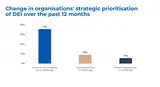
The strategic prioritisation of DEI has largely stabilised over the past 12 months, with 71.3% of respondents reporting that their organisation places about the same level of emphasis on DEI as a year ago. Relatively few organisations reported either increasing or reducing their focus, suggesting that DEI has become an established strategic priority rather than an emerging initiative. The findings indicate that organisations are increasingly embedding DEI within their broader leadership agenda, with the emphasis shifting from expanding commitments to sustaining and integrating existing initiatives.
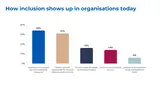
The largest share of respondents (33.6%) reported that inclusion is encouraged but not consistently measured, while 30.8% indicated that leaders are held accountable for inclusive behaviours and outcomes. This suggests that many organisations have succeeded in establishing inclusion as a cultural expectation but have yet to fully integrate it into formal leadership performance and governance frameworks. The findings point to an ongoing shift from promoting inclusive behaviours to systematically measuring and reinforcing them.
Leadership Skills
Future leadership skills centre on human capabilities
Respondents consistently identified human-centred leadership capabilities as the most significant skills gap within their organisations, particularly strategic thinking, decision-making, leading change, communication and people leadership. Many responses highlighted the growing complexity of the operating environment, noting that leaders are expected to navigate uncertainty, drive transformation and make sound decisions while engaging and developing their teams. Although AI and digital transformation were frequently referenced, respondents generally described these as challenges that require stronger strategic leadership rather than purely technical expertise. The responses highlight that future leadership capability will increasingly depend on leaders' ability to combine strategic judgement with strong interpersonal and change leadership skills.
The future of leadership is human
„Technical expertise and digital capability will continue to be important, but they won’t, on their own, make someone a great leader. In a period of constant change, the leaders who have the greatest impact will be those who can think strategically, understand and connect with people, exercise good judgement and give others confidence. Ultimately, it will be these qualities that enable organisations to perform well and stay on course through change.“

Rohan Carr
Summary
The Kestria Global Leadership Barometer highlights a leadership environment shaped by continuous disruption, accelerating technological change and growing organisational complexity. Across the findings, organisations are strengthening the leadership capabilities needed to navigate an increasingly complex and uncertain business environment.
Whether developing AI capability, attracting leadership talent, embedding diversity, equity and inclusion, or preparing leaders for the future, organisations are placing greater emphasis on building adaptable leadership, strengthening organisational capability and sustaining long-term resilience.
This year's survey draws on insights from more than 700 senior leaders worldwide, including board members, CEOs, C-suite executives and senior management. Respondents represented organisations of all sizes, from businesses with fewer than 100 employees to enterprises with more than 5,000 employees, spanning a broad cross-section of industries. Responses were drawn from organisations operating across Europe, Asia Pacific, the Americas, the Middle East and Africa, providing a global perspective on today's leadership challenges and priorities.