Decarbonisation of the cement industry
Cement is essential to modern infrastructure and urban development, yet it remains one of the most carbon-intensive industrial sectors. As net-zero targets move from ambition to obligation, the challenge is no longer whether the cement industry must decarbonise, but how it can do so under realistic economic and regulatory conditions.

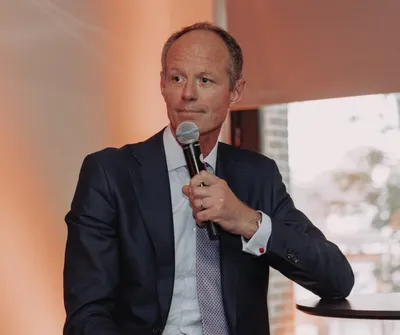
Frederic Du Jardin, Partner at Kestria Belgium, interviewed Herve Camerlynck, Managing Director at FEBELCEM - the Belgian Cement Association, about the pathways, constraints, and investment conditions shaping the decarbonisation of cement production in Belgium and across Europe. The discussion reflects the perspective of an industry facing structural limitations and growing regulatory pressure, while remaining essential to economic development. It highlights the scale of transformation required for heavy industry to reconcile climate ambition with long-term competitiveness.

Where do you see the biggest CO₂-reduction opportunities in the cement industry over the next 5–10 years?

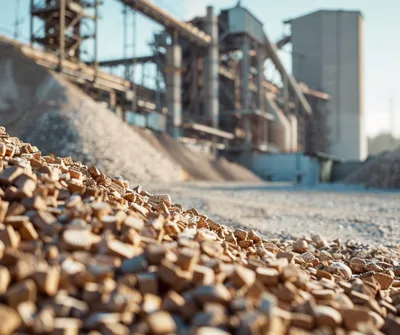
Within the next five to ten years, near-complete decarbonisation should be achievable through three main families of levers. The first consists of traditional industrial measures, notably fuel substitution and energy efficiency. Co-processing, which replaces fossil fuels with waste while recovering both energetic and mineral value, is already well established but still offers significant potential. Alternative fuels currently account for around 70% of fuel use, with a target of 90–95%. Further gains can be achieved through improved kiln efficiency; in this context, Holcim in Belgium is investing in a new kiln expected to reduce energy consumption by around 30%, with commissioning planned for 2027.

A second lever concerns raw materials and cement formulations. Cement performance is driven by clinker content, measured by the clinker factor. Belgium has a relatively low clinker factor of around 61%, compared with a European average in the mid 70s, largely due to the historical use of steel industry by-products. As these materials become scarcer, alternatives such as clays and calcined clays must be developed. Nevertheless, clinker will always be required, and its production inevitably generates CO₂ through chemical reactions.

As a result, achieving net zero ultimately depends on carbon capture technologies, particularly carbon capture and storage. A typical cement plant emits around one million tonnes of CO₂ annually, and reuse at this scale is not currently viable due to high energy requirements. At present, only one cement plant worldwide—operated by Heidelberg Materials in Norway—uses carbon capture, transport, and storage (for half of its emissions). Similar solutions are planned for Belgium, with initial installations potentially operational by 2030–2031.

However, deployment is constrained by very high costs and the lack of CO₂ transport infrastructure, creating a chicken-and-egg challenge. In Belgium, close cooperation between Wallonia and Flanders is essential to develop a shared CO₂ backbone, as both regions are interdependent. There remains a significant gap between CO₂ certificate prices (around 80–90 euros per tonne) and the operating costs of capturing, transporting, and storing CO₂, making long-term de-risking mechanisms and interim financial support necessary.

How critical are technologies like carbon capture, utilisation and storage (CCUS) for the future of cement production in Belgium? 

The average CO₂ footprint of one tonne of cement is approximately 500 kilograms of CO₂. Around one third of decarbonisation is expected to come from traditional measures, such as industrial optimisation and cement formulations, while the remaining share will be delivered by carbon capture technologies.

Collaboration currently exists mainly at corporate level, particularly among major players such as Heidelberg Materials and Holcim through their R&D centres, while broader international cooperation remains limited. Apart from potential agreements enabling cross-border CO₂ transport, there is no coordinated international financial support, leaving each company to develop its own business case.

Some industrial players, such as Equinor in partnership with Total and Shell through the Northern Lights project, may benefit from early involvement in CO₂ storage infrastructure, including plans for a pipeline from Zeebrugge to Norway. These initiatives, however, are driven by individual industrial strategies rather than structured international support.

Although around one third of cement decarbonisation can be achieved through industrial optimisation and cement formulations, the remaining two thirds depend on carbon capture technologies, which do not yet deliver a viable business case. If such a case existed, final investment decisions would already have been made.

The CCUS value chain is currently estimated to cost around 200 euros per tonne of CO₂, translating into an additional cost of approximately 100 euros per tonne of cement. At present, there is no market incentive for customers to absorb this premium. As a result, CCUS is not yet commercially viable, even though failing to decarbonise will also entail significant costs under the EU ETS.

The EU Emissions Trading System (EU ETS), established in 2005, places a price on CO₂ emissions through a cap-and-trade mechanism requiring companies to purchase allowances covering their annual emissions. Allowance prices have risen from near zero to around 80–90 euros per tonne, meaning a cement plant emitting one million tonnes of CO₂ would face costs of roughly 90 million euros.

The gradual reduction in available allowances has helped cut EU CO₂ emissions by approximately 20–23% compared with 1990 levels. By 2039–2040, allowances for industrial emitters are expected to be extremely limited, potentially driving CO₂ prices to several hundred euros or more per tonne. As a result, while decarbonisation is already costly, it will ultimately become unavoidable, as continued emissions will no longer be viable.
How scalable are alternative fuels and raw materials in cement production?

Raw materials are inherently finite. Although limestone and aggregates are abundant, they remain limited resources formed over long geological timescales. This underlines the need for a more circular approach to construction, which is increasingly evident in cities such as Brussels, where existing structures are often retained rather than demolished. This practice demonstrates the durability of concrete and has established Brussels as a reference point for circular construction.

How do EU and Belgian climate regulations influence investment in cement plants?

The introduction of the EU Emissions Trading System (EU ETS) marked the first major trigger for investment in decarbonisation by placing a cost on CO₂ emissions. In the mid-2000s, full decarbonisation in cement and lime production was widely seen as unfeasible, not due to a lack of commitment, but because the intrinsic chemical process and the high cost of carbon capture made it economically unrealistic.

Although carbon capture technology has existed since the 1970s, it was historically used to enhance oil recovery rather than reduce emissions. At a time when cement sold for around 60 euros per tonne, capture costs of 200–300 euros per tonne of CO₂ were beyond imagination with the sector’s economics.

This perception shifted with the European Green Deal in 2019, which established full decarbonisation as both feasible and unavoidable. While a fully viable business case has yet to emerge, Belgian industry players now agree that decarbonisation is the only viable long-term pathway, with remaining uncertainty focused on timing rather than direction.

Belgian regulation largely mirrors the European framework, with a strong emphasis on developing a regional CO₂ transport network managed by Wallonia and Flanders. Local authorities play a critical role in defining tariffs and operational frameworks, enabling companies to make investment decisions based on a workable pricing model.

Finally, public authorities are expected to support early projects by de-risking initial investments through targeted mechanisms such as carbon contracts for difference, helping to enable first-mover decisions during the early deployment phase.

Public authorities are yet to develop funding mechanisms for CO₂ transport and storage infrastructure, with regulatory clarity having improved significantly in recent years. Clear frameworks are now in place, defining responsibilities at the federal and regional level, enabling stakeholders to move from uncertainty to concrete planning.

CO₂ transport infrastructure will combine new pipelines with the repurposing of existing gas networks, where surplus capacity offers cost and time advantages. The business case could be further strengthened through cross-border CO₂ transport, particularly from Germany. Given Belgium’s role as an energy transit hub via Zeebrugge, a reverse flow model could position the country as a key corridor for transporting captured CO₂ to storage sites.

What leadership skills are essential for driving decarbonisation in heavy industry?

Leading deep decarbonisation requires managing industrial investments on a scale not seen for decades, at a time when European industry faces significant pressure from high energy costs, global competition, and structural challenges.

Decarbonisation is therefore not optional but the only viable route to long-term competitiveness. Given Europe’s structural energy cost disadvantage, maintaining relevance will depend on achieving deep decarbonisation. Within the next five to ten years, major economies such as China and the United States are also expected to accelerate investment, driven by the rising costs of climate change, making it essential for Europe to remain ahead.

For senior leaders, this transition demands a careful balance between short-term performance and a clear mid-term strategic vision, typically over a five- to ten-year horizon, while maintaining sufficient profitability to retain shareholder confidence.

Beyond strategy and financial discipline, leaders must also be capable of guiding organisations through profound transformation. This includes understanding sustainability beyond slogans or metrics, and distinguishing genuinely scalable solutions from those that merely appear sustainable. A broad scientific understanding of sustainability principles is therefore essential, even without mastering every technical detail.

Finally, decarbonisation represents a renewed opportunity to attract talent. Purpose-driven strategies aligned with net-zero objectives and more sustainable approaches to building have already helped traditional industrial companies regain appeal. In this context, inspirational leadership is not optional but a critical capability, particularly as digitalisation and artificial intelligence reshape industrial operations and require new skills across the organisation.

About FEBELCEM

FEBELCEM is the Belgian Cement Association, representing the country’s cement producers and serving as the sector’s collective voice on technical, regulatory, and environmental matters. The association engages with policymakers, industry stakeholders, and the construction value chain to support sustainable cement and concrete use, while actively contributing to discussions on decarbonisation, circular construction, and industrial competitiveness at both Belgian and European levels.

Frederic Du Jardin

Elevate leadership: Kestria Institute unveils executive excellence and insights.

Related insights
July 2, 2025 11 min
May 27, 2025 8 min
April 2, 2025 4 min
March 20, 2025 6 min
Discover more thoughts in Kestria Institute